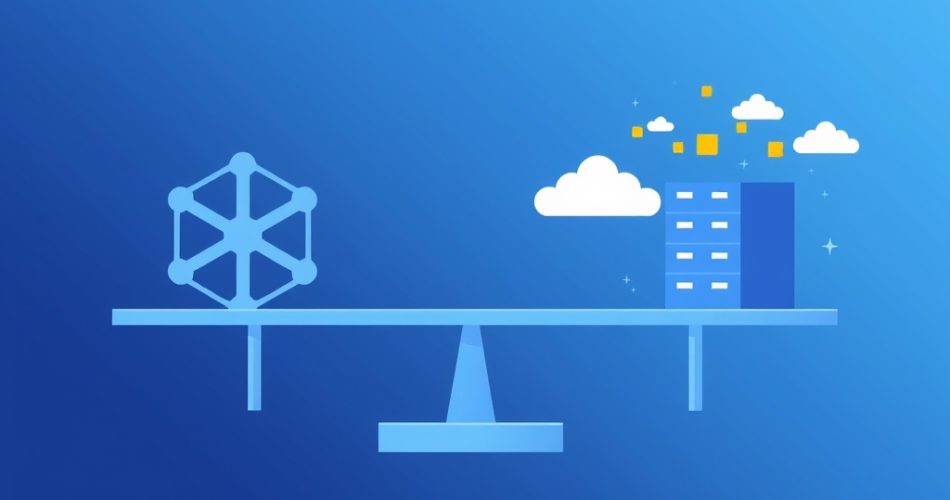
Choosing the Right Cloud Architecture: Kubernetes vs Serverless
In the world of cloud computing, two popular architectures have emerged as top contenders: Kubernetes and Serverless. Both offer unique benefits and use cases, making it challenging for developers to decide which one is right for their project. In this article, we’ll delve into the details of each architecture, exploring their strengths, weaknesses, and real-world applications.
Kubernetes: The Container Orchestration Powerhouse
Kubernetes, also known as K8s, is an open-source container orchestration system for automating the deployment, scaling, and management of containerized applications. It was originally designed by Google, and is now maintained by the Cloud Native Computing Foundation (CNCF). Kubernetes provides a robust platform for deploying and managing containerized applications, making it a popular choice for microservices-based architectures.
Key Features of Kubernetes
- Container Orchestration: Kubernetes automates the deployment, scaling, and management of containerized applications.
- Self-healing: Kubernetes can automatically restart containers that fail or become unresponsive.
- Load Balancing: Kubernetes provides built-in load balancing capabilities to distribute traffic across multiple containers.
- Scalability: Kubernetes makes it easy to scale applications up or down to match changing demand.
Example Use Case: Deploying a Microservices-Based Application
apiVersion: apps/v1
kind: Deployment
metadata:
  name: my-deployment
spec:
  replicas: 3
  selector:
    matchLabels:
      app: my-app
  template:
    metadata:
      labels:
        app: my-app
    spec:
      containers:
      - name: my-container
        image: my-image
        ports:
        - containerPort: 80
Serverless: The Event-Driven Architecture
Serverless, also known as Function as a Service (FaaS), is a cloud computing model where the cloud provider manages the infrastructure and runs code in response to events. Serverless architectures are designed to be highly scalable and flexible, making them well-suited for applications with variable workloads or unpredictable traffic patterns.
Key Features of Serverless
- Event-Driven: Serverless architectures are triggered by events, such as API requests or changes to data.
- Scalability: Serverless architectures can scale up or down to match changing demand.
- Cost-Effective: Serverless architectures only pay for the compute resources used, reducing waste and costs.
- Flexibility: Serverless architectures can be easily integrated with other cloud services and tools.
Example Use Case: Building a Real-Time Analytics Dashboard
import boto3

dynamodb = boto3.resource('dynamodb')
table = dynamodb.Table('my-table')

def lambda_handler(event, context):
    # Process the event data
    data = event['data']

    # Update the DynamoDB table
    table.put_item(Item=data)

    # Return a response
    return {'statusCode': 200}
Choosing the Right Architecture
When deciding between Kubernetes and Serverless, consider the following factors:
- Application Requirements: Consider the scalability, reliability, and performance requirements of your application.
- Development Team Experience: Consider the experience and expertise of your development team in deploying and managing containerized applications or serverless architectures.
- Cost and Budget: Consider the cost and budget constraints of your project, including the cost of infrastructure, development, and maintenance.
- Integration with Other Services: Consider the ease of integration with other cloud services and tools, such as databases, storage, and messaging services.
Conclusion
In conclusion, both Kubernetes and Serverless offer unique benefits and use cases, making them popular choices for cloud computing architectures. By considering the application requirements, development team experience, cost and budget, and integration with other services, you can choose the right architecture for your project. Remember to evaluate the pros and cons of each architecture and consider the trade-offs between scalability, reliability, and cost.
Key Takeaways
- Kubernetes is a container orchestration system for automating the deployment, scaling, and management of containerized applications.
- Serverless is a cloud computing model where the cloud provider manages the infrastructure and runs code in response to events.
- Consider the application requirements, development team experience, cost and budget, and integration with other services when choosing between Kubernetes and Serverless.
- Evaluate the pros and cons of each architecture and consider the trade-offs between scalability, reliability, and cost.

